Pasture Reclamation & Fence Line Clearing in Fayetteville, AR
Fayetteville Mulching reclaims grazing acres lost to eastern red cedar, blackberry, brier, and brush for cattle producers and hobby farms around Fayetteville, Farmington, Prairie Grove, Lincoln, Goshen, Elkins, and Huntsville. We clear fence lines, open paddocks, cut pond and creek approaches, and reopen fields across Washington, Madison, and Benton counties, Arkansas. This is beef country on the Springfield Plateau, and brush is quietly taking the best of it.
Soft, wet, and freshly grazed ground is the reason we care what runs under the head. An ASV Posi-Track on rubber tracks spreads its weight over a long footprint and leaves a print instead of a trench, which is what lets a machine cross a spring fed draw in March. The head we favor on open pasture is a Loftness Battle Ax, a drum known for the finest chip of the bunch, because a fine chip settles into the sod and rots down rather than sitting on top in mats that smother grass. A blade sets you back instead of forward on a field like this. It skims the shallow plateau soil off with the cedar and stacks the two together, and a burn scar in a hay meadow grows nothing for years.
Fence Lines the Cattle Made
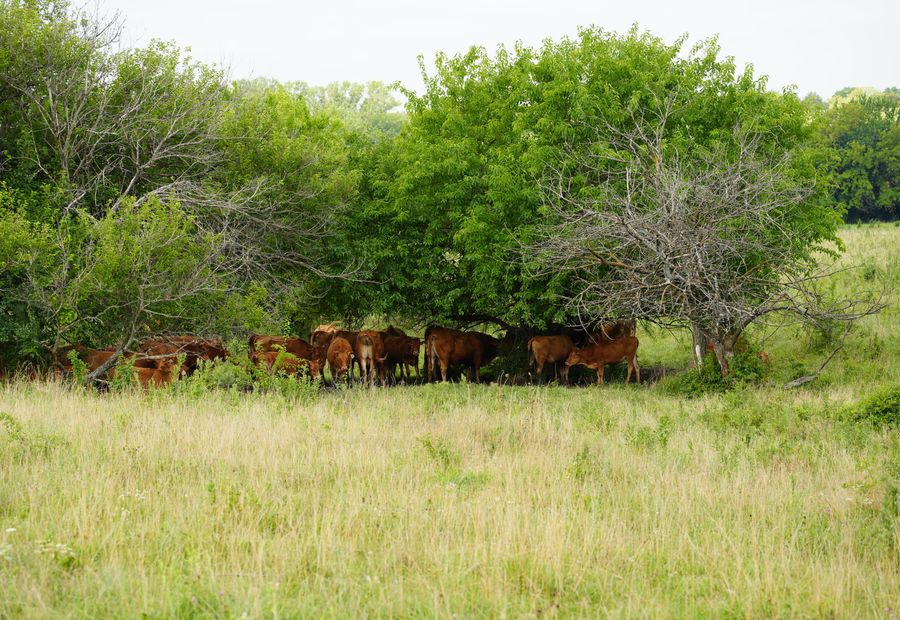
Cattle stand in the shade at the fence and the fence row thickens where they will not graze it. That row is the seed source for the whole field. Cutting a wide clean strip along the wire does two things at once. It stops the next wave of cedar and it lets you see and fix the fence you have been meaning to walk.
Paddocks, Gates, and Access
Rotational grazing needs interior lanes, and brush closes them fastest. We cut lanes wide enough for a tractor and a trailer, open gate approaches so a gate swings on solid ground, and clear the corner a cattle trailer has to back into. On the tracts running up into the Boston Mountains, an opened lane to a hilltop field is often worth more than the field.
After the Cut
Grass wants sun, moisture, and time. The chip layer helps with the second one and holds soil on a slope through the first spring rains. Cedar you cut is gone for good. Brier and sumac will test you again, so keep a bush hog moving over the reclaimed ground in year two. Call (479) 555-0178 and we will walk the field with you before quoting a number.
How many grazing acres can I get back?
More than most owners expect. Walk a cedar filled field and count the ground the cattle actually use, then compare it to the deed acres. On a lot of Washington County places a quarter or better of the pasture is carrying brush instead of grass. All of that comes back once the sun reaches the dirt again and the grass has a season to fill in.
Do I have to reseed after mulching?
It depends on what is underneath. Fields that went to cedar in the last several years usually still hold fescue and native grass in the sod, and those come back on their own once the shade is gone. Ground that stayed shaded for decades has no seed bank worth counting on and wants overseeding. Broadcast into the chip layer and let a rain and hoof traffic work it in.
Can you work around my existing fence?
Yes, and we do it constantly. The operator cuts a clean strip on both sides of the wire and keeps the head off your posts and braces. Where the fence is coming out anyway, mulching a corridor first gives a fence crew a straight sightline and firm footing, which saves you money on the build.
What about the pond bank and the water gap?
Pond edges and creek approaches are good mulching work, since the roots stay in the bank and hold it. We keep chips out of the water and leave a buffer of cover where the ground falls to it. Cattle get a clean approach to drink without a scoured, muddy bank sliding into the pond.