Land Clearing in Fayetteville, AR
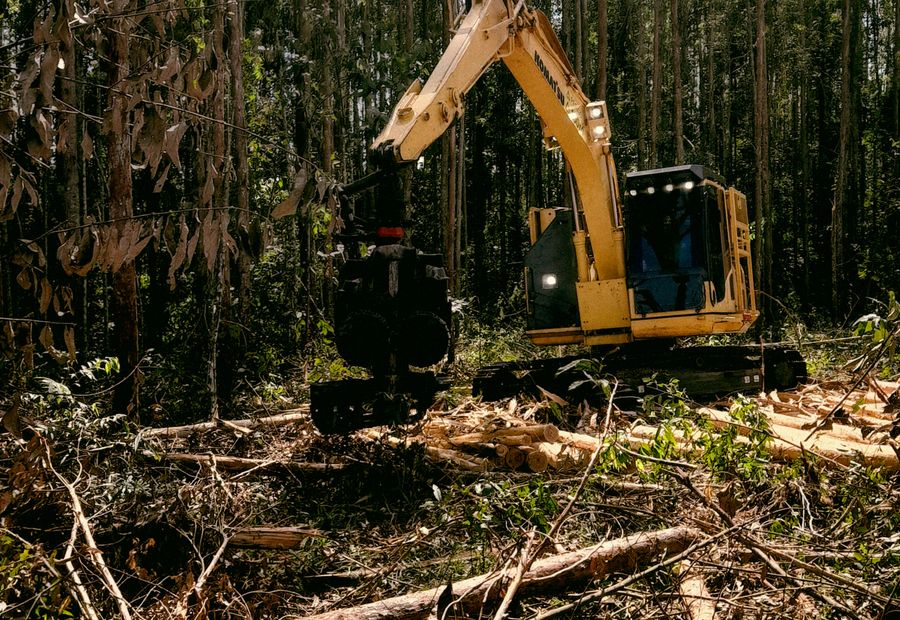
Fayetteville Mulching is a land clearing contractor serving rural landowners, cattle producers, hunters, and builders across Fayetteville, Farmington, Prairie Grove, West Fork, Elkins, Goshen, Greenland, and Huntsville. We clear overgrown acreage, cedar choked pasture, building sites, driveway corridors, fence lines, and hunting tracts throughout Washington, Madison, Benton, Franklin, and Crawford counties, Arkansas.
Land clearing is a word customers search. It covers three different machines doing three different things to your dirt. We run FAE heads out of Italy on a tracked carrier for standing vegetation, and Fecon builds the FTX line of purpose built mulching tractors that do the same work in a heavier class. Either one grinds wood and leaves your soil profile where it lies. An excavator with a thumb does the opposite job and does it well: it pulls root balls, digs a pad, and loads a truck. A dozer blade splits the difference badly on Ozark ground. It shoves the trees over and takes the thin plateau topsoil into the windrow with them, and that soil is what your fescue was growing in. Every root ball the blade lifts leaves a hole. Those holes get backfilled, and then they keep sinking under a field you have to mow.
Phased Clearing
Most build sites here run in two stages. Stage one is the mulcher, which opens the tract, kills the brush, and lets you and your builder actually see the lay of the land, the drainage, and the corners. Stage two is the excavator on the footprint only. You pay for grubbing under the house, the shop, and the septic field instead of paying for it across five acres of yard and pasture.
Grade, Water, and the Rules
Water is the thing that bites after clearing. Hollers here funnel runoff fast, and a bare cut on a slope above a county road becomes somebody else's problem in one storm. Mulched ground starts with cover on it. Where a build follows, clearing and grading an acre or more puts the project under the state stormwater plan, and that plan belongs to the builder. Nobody needs a state permit to knock brush off their own pasture.
What Gets Hauled Off
Nothing, on a straight mulching job. No log truck, no roll off, no tipping fee, no burn day scheduled around the humidity. If a stand carries real sawtimber, say white oak above a foot through, that is a harvest and it can pay you rather than cost you. We will tell you when you have it. Call (479) 555-0178 to walk your ground.
Which machine should clear my land?
The end use picks the machine. Grazing acres, trails, hunting ground, and a view off a ridge all favor the mulcher, because the roots hold the hillside and the chips cover the dirt. A house pad, a shop slab, or a pond needs an excavator, since those specs call for the root zone gone. Plenty of tracts get both, in that order.
What does grubbing mean?
Grubbing is pulling the root zone out of the ground instead of cutting the top off it. Engineered fill goes down in lifts and gets compacted, and a buried root rots and leaves a void under your slab. Grubbing is not something a mulching head can do. It cuts at grade and a few inches under in soft dirt, which is right for pasture and wrong for a foundation.
Will I have a debris pile to burn?
Not from mulched acreage. The wood ends up as a chip layer spread over the cut, so there is no windrow sitting at the fence waiting on a dry day. That matters in Washington County, where dry spells bring burn bans and burning is limited to daylight hours anyway. Grubbed stumps and root balls are the exception, and we agree on where those go before the work starts.
Can you clear steep ground above a creek?
Usually. Rubber tracks put a fraction of the ground pressure under the machine that a tire does, so a tracked carrier climbs and crosses ground a wheeled machine tears apart. Every hill still has a grade where the operator gets off, and he decides that standing on it, not from a photo. Leaving the root mat intact on a slope above water is the whole argument for this method.