Hunting Land, Trails & Food Plots in Fayetteville, AR
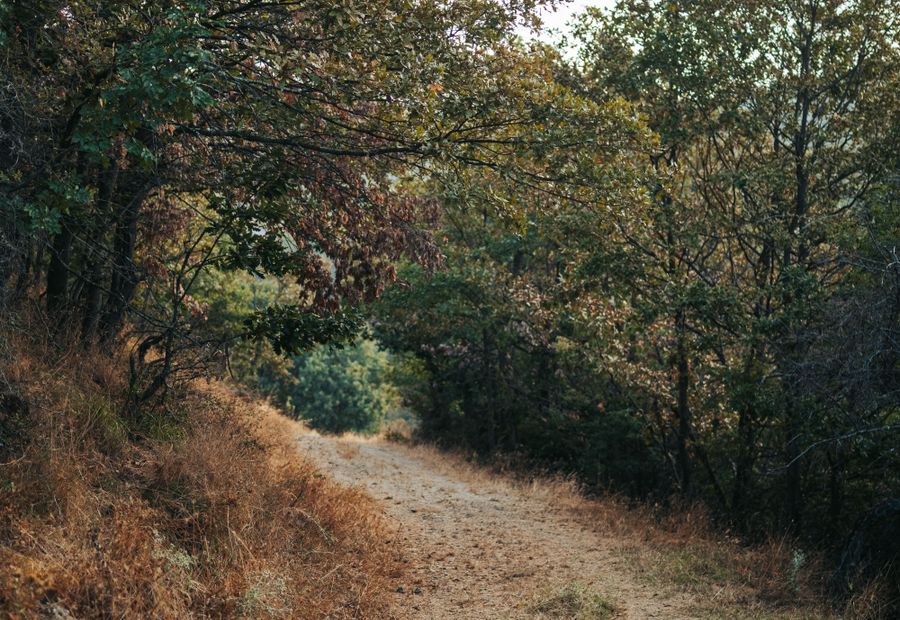
Fayetteville Mulching cuts shooting lanes, ATV and access trails, food plot openings, and bedding edges on hunting tracts and recreational acreage around Fayetteville, Elkins, Goshen, West Fork, Huntsville, and the Boston Mountain country of Madison County. We are a forestry service working deer, turkey, and bear ground across Washington, Madison, Franklin, and Crawford counties, Arkansas.
Madison County land trades on what walks across it. Whitetail, wild turkey, and black bear are the reason buyers come east out of the NWA corridor for acreage, and the money those tracts change hands for says the market believes it. Our head on this work is a Loftness Battle Ax drum, which leaves the finest chip of any drum we run, and a Takeuchi high flow track loader carries it where a wheeled machine would spin. Fine chip matters in the woods because it settles fast and looks natural inside a season. A dozer approach does the opposite. It leaves a scraped, rutted trail with root ball holes on both sides and a brush pile at every turn, and the deer read it as exactly what it is.
Trails That Stay Usable
Access trails on Ozark ground fail for one reason, which is water. We cut trails that follow contour instead of running straight down a holler, keep them off the fall line, and leave the root mat under the tread so the track holds together after a hard rain. The finished trail takes a side by side, a tractor, or a wheeler, and it takes them in February.
Plots and Edge Feathering
A food plot needs sun, which usually means opening a hole in oak canopy or reclaiming an old field going to cedar. We open it and grind the woody material into a layer you can disc. Feathering the edge is the part most owners skip. Instead of a hard wall between timber and plot, the operator thins a band on the outside so brush and briers come back low and thick. That band is cover, and deer use a soft edge far harder than a straight one.
What Comes Back
Cedar you cut is done. The brush you feathered on purpose regrows, which is what you wanted. Locust, sumac, and blackberry sprout hard in year two and a lane closes faster than you expect, so most tracts get a light mowing pass every couple of seasons. Call (479) 555-0178 before the season, not during it.
How wide should a shooting lane be?
Narrow enough to stay a lane, wide enough to find a deer in it. Most owners land between the width of a truck and the width of a farm road, depending on whether they shoot a rifle or a bow. Length and direction matter more than width. Cut so the lane crosses travel routes and so the sun is not in your eyes at the hour you hunt.
Will there be stumps left in the lane?
No. The drum cuts at grade and takes the stub down with it, so you are not shooting over a stob or bouncing a side by side off one. That is the difference between a mulched lane and one cut with a saw. Nothing gets stacked either, so you have no brush pile blocking the view you just paid to open.
When should this work get done?
Late winter into spring is the calendar for hunting ground. Bare woods let the operator see terrain and lines, dormant wood cuts faster, and firm ground carries the machine. Doing it then also gives plots a full growing season and gives deer months to settle back into ground that got disturbed. Nobody should be running a machine through bedding cover in the fall.
Can you clear a plot and leave the oaks?
That is the point of the machine. The operator takes cedar, brush, and small stems and leaves white oak, red oak, and hickory standing wherever you want mast. Around Madison County, that mast is what holds deer, turkey, and bear on a place. Flag the trees you care about and they stay.